
Table of Contents
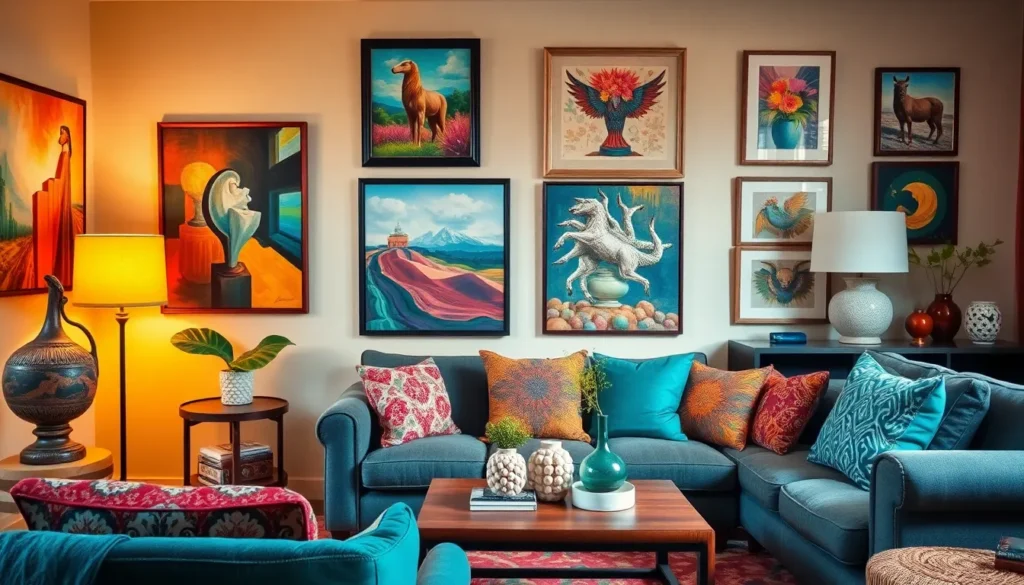
ToggleArt decor isn’t just about slapping a painting on the wall and calling it a day. It’s the secret ingredient that transforms a house into a home, showcasing personality and flair. Imagine walking into a room that feels like a gallery, where every piece tells a story and sparks joy. That’s the magic of art decor—it’s like giving your space a personality makeover without the awkward small talk.
Overview of Art Decor
Art decor plays a crucial role in creating an inviting atmosphere within a home. This concept encompasses various artistic elements that enhance a living space, contributing to its overall aesthetic. Utilizing paintings, sculptures, and functional art pieces, homeowners can curate environments that reflect personal tastes and styles.
Art decor not only serves as a visual treat but also communicates feelings and emotions. Each piece chosen imparts a unique character to a room, enabling self-expression. For instance, a vibrant abstract painting can ignite energy within a space, while serene landscapes offer tranquility.
Moreover, selecting the right art decor can harmonize with existing furnishings and color schemes. Contrast and balance are vital when incorporating different types of art. For example, a modern sculpture may complement a minimalist design, while vintage artwork enhances a traditional setting.
Art decor doesn’t necessitate a large budget. Affordable options like prints or DIY projects allow anyone to enrich their surroundings with artistic flair. Thrift stores and local art fairs offer unique finds that can elevate personal spaces without breaking the bank.
Participating in art installations and community exhibitions also contributes to the appreciation of art decor. Engaging with local artists fosters a sense of connection, creating an enriched environment filled with stories and cultural significance. This engagement allows individuals to discover art that resonates personally, transforming mere walls into a gallery that tells their story.
History of Art Decor
Art decor’s roots trace back to ancient civilizations, where aesthetic enhancement began. Ancient Egyptians adorned their spaces with intricate murals, showcasing their beliefs and lifestyle. Greeks emphasized proportion and harmony in their decorative designs, influencing later Western art movements significantly.
Early Influences
Italian Renaissance artists revived classical themes, enriching interiors with frescoes and sculptures. During this period, decorative arts gained prominence, as skilled artisans produced exquisite furnishings and tapestries. The Baroque era further pushed boundaries, employing bold colors and dramatic forms that created a sense of grandeur. Eastern influences, particularly from Asia, introduced intricate patterns and textiles, expanding artistic vocabulary across Europe. These early influences laid the groundwork for what would evolve into distinct styles throughout history.
Modern Developments
The 19th and 20th centuries witnessed significant changes in art decor. Movements like Art Nouveau emerged, combining nature-inspired designs with craftsmanship in everyday objects. Following World War II, minimalism reshaped the art decor landscape, focusing on simplicity and function. The rise of contemporary art brought additional versatility, with diverse materials and styles reflecting personal narratives. Currently, art decor embraces an eclectic mix, enabling individuals to express unique identities through art, from gallery-worthy pieces to handcrafted items.
Key Characteristics of Art Decor
Art decor encompasses various features that contribute to its distinct charm. Two vital aspects include the color palette and intricate patterns and textures.
Color Palette
Color palettes in art decor play a crucial role in setting the mood. Vibrant hues infuse energy into a space, while muted tones create tranquility. Art decor often combines complementary colors to establish harmony and contrast. Using color effectively can emphasize focal points within a room. Warm colors, such as reds and yellows, evoke feelings of warmth, while cool colors like blues and greens promote calm. Balancing bold and subtle shades can help achieve a cohesive look. Elements like artwork, accessories, and furniture can all work together when a thoughtful color palette is applied.
Patterns and Textures
Patterns and textures bring depth to art decor. Geometric designs often create a modern feel, while organic patterns offer a more traditional look. Textured surfaces add dimension and intrigue, creating visual interest in otherwise flat spaces. Fabrics like velvet and linen introduce softness, contrasting with hard materials such as metal and glass. Layering different textures enhances the overall aesthetic, making the space inviting. Mixing patterns requires attention to scale and proportion, ensuring a harmonious blend. Ultimately, these elements can transform a simple room into a captivating environment that reflects individual style.
Popular Art Decor Styles
Art decor manifests in various styles, each bringing distinct elements that transform spaces. Understanding different styles helps in curating one’s environment.
Art Deco
Art Deco exudes luxury and glamour. Characterized by bold geometric shapes, rich colors, and opulent materials, this style originated in the 1920s and 1930s. Designers often emphasize symmetry and streamlined forms. Iconic examples include furniture featuring lacquered surfaces and accentuated with metals like chrome. Furthermore, vivid hues and intricate patterns embody the elegance associated with this era. Works of artists like Tamara de Lempicka highlight the lavishness of Art Deco. This style remains popular, as it captures the spirit of modernity while integrating historical influences.
Contemporary Art Decor
Contemporary art decor reflects current artistic trends and innovations. This style embraces minimalism and emphasizes clean lines, functional designs, and open spaces. Artists often explore diverse mediums, including digital art and mixed media. Bold colors frequently juxtapose with neutral backdrops, creating striking focal points. Incorporating sustainable materials remains essential, showcasing a commitment to eco-friendliness. Furthermore, contemporary art decor encourages personal expression through custom pieces. Renowned artists like Damien Hirst and Yayoi Kusama contribute to this evolving style, ensuring it remains fresh and engaging.
Tips for Incorporating Art Decor in Your Home
Curating art decor enhances the unique identity of a space. Every room invites a different atmosphere, so consider the mood you want to create. For example, vibrant colors energize a living room, while softer tones promote relaxation in a bedroom.
Incorporating diverse pieces adds depth. Mix various styles, such as contemporary and traditional art, to create a dynamic visual narrative. Displaying sculptures alongside paintings provides a three-dimensional quality that captures attention.
Choosing the right location for art pieces is crucial. Position larger works as focal points on prominent walls. Smaller artworks can complement corners or shelves, allowing for a well-balanced design throughout the home.
Balancing art with existing furnishings enhances cohesion. Match color palettes in artwork to tones in furniture or fabric to establish harmony. Utilizing contrasting elements can create striking visual interest, guiding the eye and enriching the environment.
Affordable art options abound, making personal expression accessible. Prints, local artist works, or DIY projects add individuality without breaking the bank. Engaging with community exhibitions fosters connections, enriching the overall decorative experience.
Experimenting with placement can reveal surprising results. Hanging art at eye level creates an inviting atmosphere. Arranging a gallery wall encourages exploration, allowing each piece to engage with its surroundings uniquely.
Finally, layering textures amplifies visual appeal. Combining smooth surfaces with rough textures captures attention and invites interaction. This strategy transforms a mundane space into an exciting environment that reflects personal style.
Art decor is essential in shaping the ambiance of a home. It serves as a powerful tool for self-expression and creativity, allowing individuals to curate spaces that resonate with their unique personalities. By thoughtfully selecting art pieces that harmonize with existing decor, anyone can create an inviting atmosphere that tells a story.
The versatility of art decor means it can fit any budget, making it accessible to all. Whether through affordable prints or engaging with local artists, there’s an opportunity for everyone to enhance their living spaces. Embracing diverse styles and experimenting with color, texture, and placement can transform ordinary rooms into captivating environments. Ultimately, art decor enriches lives and elevates homes, turning them into personalized sanctuaries.


